Build bootable macOS installer images without needing a Mac.
This project has two parts:
- A script (
mkmaciso) that uses only macOS built-in tools and commands to download and install the full macOS installer from Apple's servers into /Applications, and then creates bootable ISO/DMG images. - GitHub Action workflows that run
mkmacisoon Azure datacenter-hosted Mac minis if you don't have macOS.
Check Release page first - someone might've already built what you need.
ISO files - These work great for VMs (Proxmox, QEMU, VirtualBox, VMware). Just attach them like a virtual DVD. They're hybrid UDF/HFS format, so they'll even mount in Windows if you need to poke around inside.
DMG files - Raw disk images with GPT partition tables. Flash these to a USB drive with Rufus (Windows), dd (Linux), or asr (macOS) to make bootable installation media. You can also convert them to VHD/VMDK with qemu-img if you want.
Pretty much everything from Lion (10.7, 2011) through the latest Tahoe (26, 2025). Full list:
Lion, Mountain Lion, Mavericks, Yosemite, El Capitan, Sierra, High Sierra, Mojave, Catalina, Big Sur, Monterey, Ventura, Sonoma, Sequoia, Tahoe.
Tip
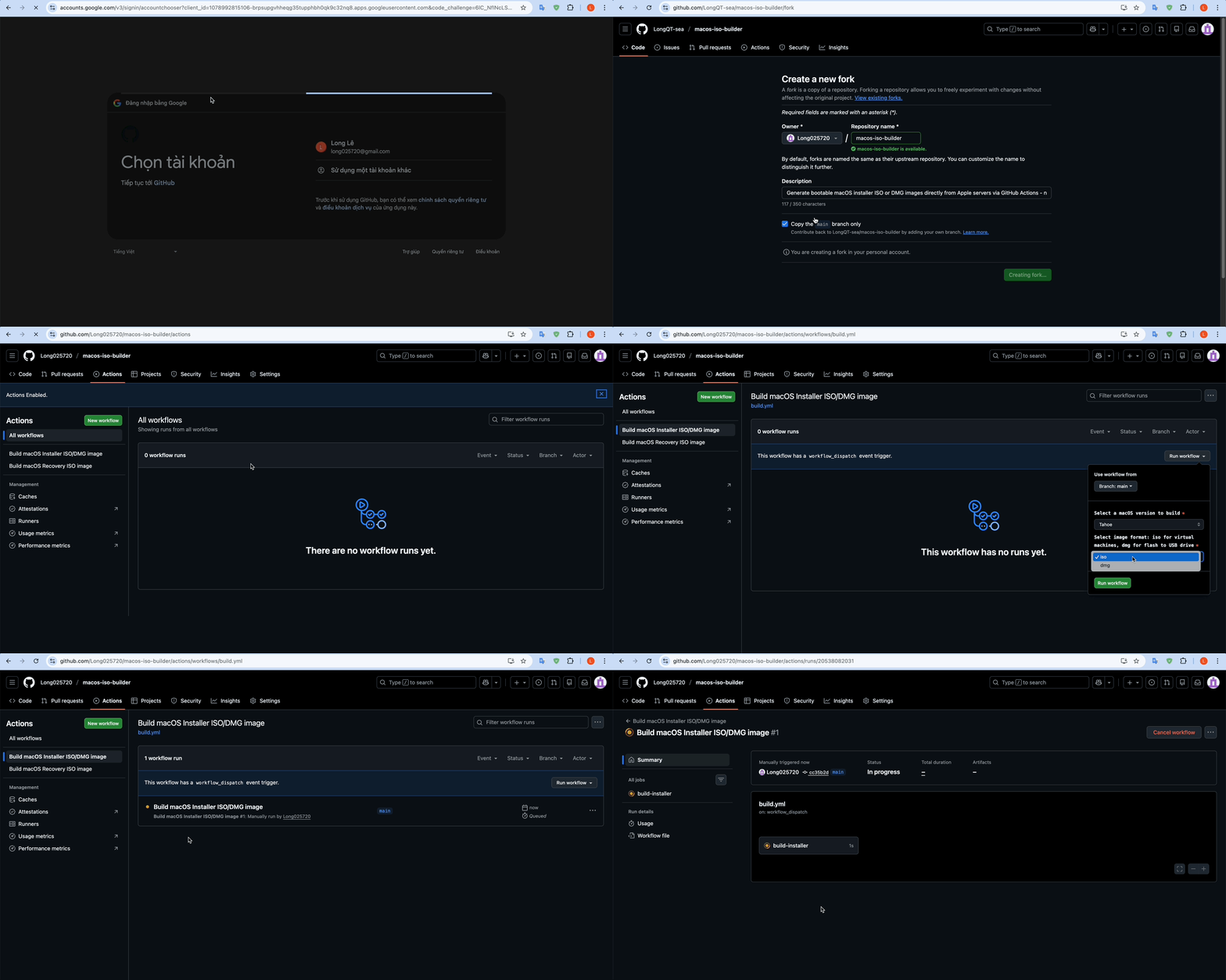
Click here to watch a visual guide (GIF)
-
Fork this repository (requires a GitHub account).
-
Navigate to the Actions tab in your forked repository.
-
Click the green "I understand my workflows, go ahead and enable them" button.
-
Select a workflow from the left sidebar:
- Recovery ISO - Small recovery image, builds in 2-5 minutes. Good for VMs.
- Full Installer - Complete offline installer, 5-18GB, takes 10-60 minutes to build.
-
Click the "Run workflow" button and configure the workflow inputs:
- macOS version – Choose a version (Sequoia, Sonoma, etc.).
- Image format – Choose
isofor virtual machines ordmgfor bootable USB drives.
-
Click the green "Run workflow" button to start the build, then wait for the workflow to complete (this may take 10–60 minutes).
-
Once completed, reload the page and scroll down to the Artifacts section. Click the artifact link to start downloading (e.g.,
macOS_Sequoia_15.7.3.iso). -
Unzip the downloaded artifact and you're done.
Quick run (change 'tahoe' to whatever you want):
curl -s https://raw.githubusercontent.com/LongQT-sea/mkmaciso/main/mkmaciso | bash -s tahoeOr download the script first, then run with parameters:
curl -O https://raw.githubusercontent.com/LongQT-sea/mkmaciso/main/mkmaciso
chmod +x mkmaciso
./mkmaciso --help
Running ./mkmaciso without arguments gives you an interactive menu.
For VMs, just attach the ISO as a virtual CD drive. Proxmox users - if you want better performance, look into GPU passthrough. I have another repo (OpenCore-ISO) that might help with installation, and one for Intel iGPU passthrough specifically.
For bootable USB drives, after you flash the DMG there'll be leftover space on the drive. You can use that to create a FAT32 partition for your EFI folder if you need one.
If you're using dd on Linux, triple-check your target device. dd doesn't ask for confirmation.
- macOS 10.9 or newer (11+ is better)
- Intel Mac recommended, Apple Silicon works but with some limitations
- 20-40GB of free space while building
- Internet connection
- sudo access
Apple for macOS and their update servers, Mavericks Forever for documenting the Mavericks recovery protocol, and the InsanelyMac community for their research on downloading macOS directly from Apple's catalog.
This tool downloads macOS images directly from Apple's official servers. Users are responsible for complying with Apple's Software License Agreement. macOS is a trademark of Apple Inc.
Licensed under GPLv3.